From scrolling through social media to answering messages and watching videos, checking a smartphone has become part of the bedtime routine for millions of people. But research suggests that what happens on the screen — and how long we stay on it — can interfere with the quality and timing of sleep.
For many adults, the last activity of the day is not reading a book or turning off the lights, but checking a smartphone. A few minutes of scrolling can easily turn into half an hour or more, delaying bedtime and keeping the brain engaged at a time when the body should be preparing for sleep.
The issue has become particularly relevant in the United States, where sleep deprivation remains common. According to the Centers for Disease Control and Prevention (CDC), adults ages 18 to 60 should generally get at least seven hours of sleep per night. Yet new federal data show that 30.5% of U.S. adults slept less than seven hours on average in 2024.
The screen is not the only problem
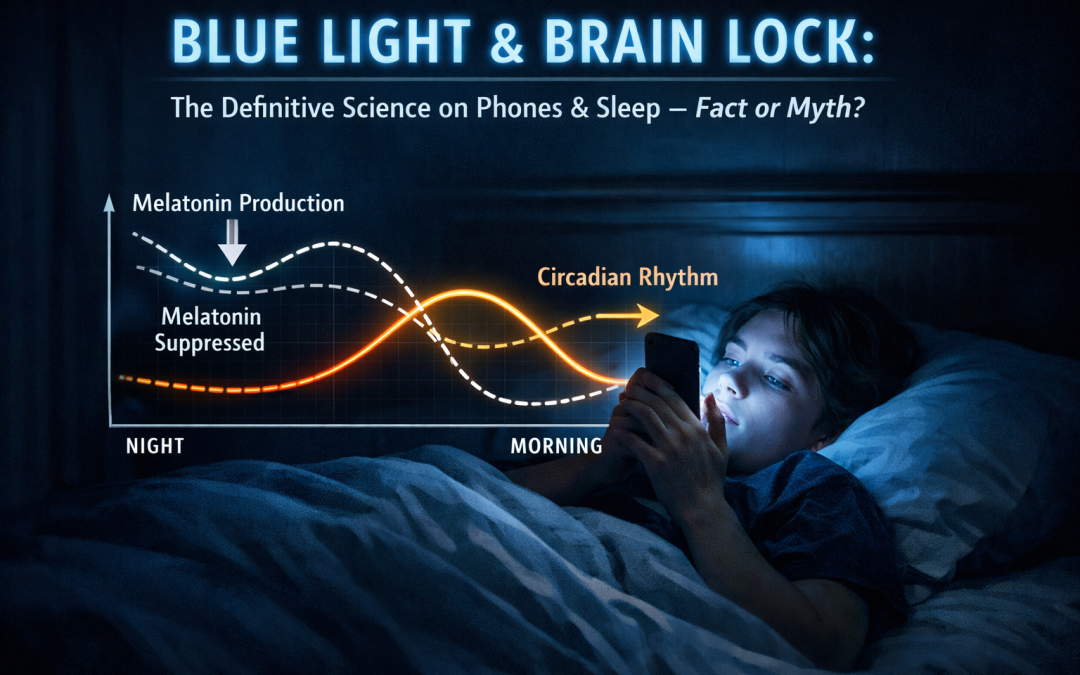
Research into nighttime smartphone use has focused heavily on the light emitted by electronic screens, particularly short-wavelength, or blue, light. This type of light can influence the body’s circadian rhythm — the internal biological clock that helps regulate sleep and wakefulness.
A randomized study involving 22 healthy adults found that using a smartphone with blue light in the evening was associated with reduced sleepiness and changes in the timing of melatonin-related processes. The researchers concluded that nighttime exposure to blue-light smartphone displays may negatively influence sleep-related factors.
Melatonin is a hormone involved in regulating the sleep-wake cycle. Exposure to light at night can signal to the brain that it is still daytime, potentially making it more difficult for the body to transition naturally into sleep.
However, scientists emphasize that the story is more complicated than simply blaming blue light.
What you are watching matters
The content consumed before bed can also keep the brain active. News, social media discussions, work emails, emotionally charged videos and other stimulating content may increase mental alertness precisely when the body should be winding down.
A 2025 survey commissioned by the American Academy of Sleep Medicine found that 50% of U.S. adults use a screen while in bed every day, while another 33% do so most days or several days a week. The survey also found that 38% said using a phone or tablet before bed to follow news or current events — sometimes described as “doomscrolling” — made their sleep slightly or significantly worse. Among adults ages 18 to 24, the figure reached 46%.
The same survey found that 26% of adults said they prioritize screen time on their phones over getting the recommended amount of sleep.
The lost minutes add up
Another important factor is simple: time spent on the phone is time that could otherwise be spent sleeping.
Someone who intends to go to bed at 10:30 p.m. but spends another 45 minutes scrolling is effectively moving the beginning of their sleep period to 11:15. If the wake-up time remains unchanged, the result is a shorter night.
Research has also found associations between smartphone use in bed and poorer sleep measures. In a study involving 75 participants, researchers combined smartphone-use data with sleep information collected through wearable devices. The analysis found that smartphone use in bed was associated with longer sleep latency — the time needed to fall asleep — as well as more awake time during the night.
What happens when phone use is reduced?
There is also experimental evidence suggesting that reducing nighttime smartphone use can make a difference.
In a randomized pilot study of 38 participants, one group was instructed to avoid mobile-phone use for 30 minutes before bedtime for four weeks. Researchers found reductions in the time participants needed to fall asleep, along with improvements in sleep duration and reported sleep quality. The study also observed improvements in pre-sleep arousal and working memory.
Because the study was relatively small, its results should not be interpreted as proof that eliminating smartphones before bed will solve sleep problems for everyone. Still, it adds to a growing body of evidence supporting reduced nighttime screen exposure.
A better bedtime routine
The American Academy of Sleep Medicine recommends avoiding blue light from handheld electronics for 30 to 60 minutes before bedtime. Its recent survey also recommends keeping phones out of the bedroom when possible and silencing notifications that can interrupt sleep.
The CDC similarly recommends maintaining a consistent sleep schedule and avoiding artificial light, particularly close to bedtime. Adults generally need at least seven hours of sleep each night.
The goal does not necessarily have to be giving up smartphones completely. A more practical approach may be establishing a period without screens before bed, moving the phone away from the bed, turning off notifications and replacing late-night scrolling with quieter activities such as reading, stretching or listening to relaxing music.
The science increasingly suggests that the question is not simply whether smartphones are “bad” for sleep. It is how, when and why we use them. A few minutes of checking a message may be very different from an hour of emotionally stimulating content in bed. What matters most is whether nighttime phone use delays sleep, increases alertness or becomes a regular reason for getting less rest.
With more than 30% of U.S. adults already sleeping less than seven hours a night, protecting the final part of the evening may be one practical way to protect the sleep that the body needs.
Using Your Phone Before Bed: What Science Knows About Its Impact on Sleep